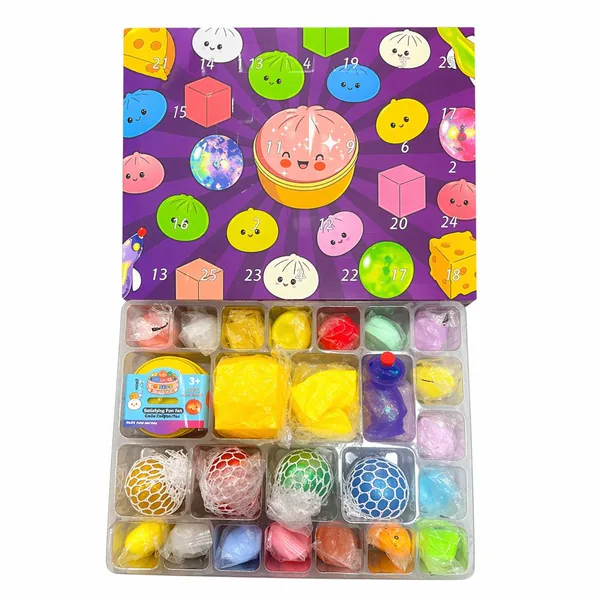
A mixed carton squishy quote is worth pursuing only if it answers six things in writing: exact SKU, price per stated selling unit, MOQ, units per carton, carton dimensions and gross weight, and which safety or quality documents apply to that exact item and market. If any of those are missing, you are not comparing offers — you are comparing guesses. Score each reply on evidence completeness, then decide which supplier earns your first purchase order.
The practical outcome: a supplier who returns a line-item quote with carton data and a document list can be moved to sampling. A supplier who replies with a single unit price and 'MOQ negotiable' stays in a holding file until they fill the gaps. Speed of reply is a communication observation, not proof of anything about quality, fraud risk or how they will behave after payment.
What should a squishy quote itemize before you compare anything?
Ask for the quote broken into tooling, unit price by quantity band, packaging, testing and freight terms, because each line negotiates differently — that is the standard recommendation for toy production quotes from China Importivity. A lump-sum price hides where the money actually sits, and it makes a later change request impossible to price.
"Squishy toy" is a catch-all term covering soft materials such as slow-rebound PU foam, TPR and silicone, so two suppliers quoting the same shape may be quoting different constructions entirely Levich Toys. Your quote request should name the material you expect, the size, the finish, and whether the item is a display piece or a squeeze-and-release stress item. Without that, a cheap quote and an expensive quote are not the same product.
For a mixed carton, add one more line to the request: which SKUs can share a carton, in what ratio, and whether the assortment is fixed or selectable. Mixed cartons are a request, not a standing offer. Treat any verbal "yes, we can mix" as unconfirmed until it appears in the written quote with a ratio and a carton count.
Quote completeness scorecard: what a strong reply looks like
| SKU and item name | Strong: exact SKU plus item name and a photo of the quoted version. Weak: a category name such as 'squishy animals'. |
|---|---|
| Price and selling unit | Strong: price per stated selling unit (piece, set, calendar) and the trade term, e.g. indicative EXW. Weak: one price with no unit defined. |
| MOQ | Strong: MOQ stated in pieces and in cartons, with the arithmetic shown. Weak: 'MOQ negotiable'. |
| Carton data | Strong: units per carton, carton dimensions and gross weight. Weak: units per carton only, with no measurements. |
| Mixed carton terms | Strong: allowed SKUs, ratio per carton, minimum cartons per SKU. Weak: an unquantified 'we can mix'. |
| Packaging | Strong: retail packaging type named, and whether private-label packaging changes the price or the carton. Weak: 'standard packing'. |
| Documents | Strong: a list of documents matched to the exact item, material, function, age grade and destination market. Weak: 'we have certificates' with no item linkage. |
| Sample path | Strong: sample cost, sample lead time and whether the sample is production-representative. Weak: 'sample available' with no terms. |
| Lead time | Strong: stated as a range tied to order quantity and confirmed only after deposit. Weak: a single number quoted before the order exists. |
| Change and customization | Strong: what can be changed (color, logo, packaging) and what cannot. Weak: 'any customization possible'. |
How do you check MOQ and carton arithmetic without inventing numbers?
Do the arithmetic yourself before you judge the MOQ. If a quote says 5 cartons at 48 pieces per carton, the practical entry point is 240 pieces — and that is a minimum order, not an order multiple. Unless the supplier explicitly states that orders must ship in full cartons, you are not obliged to round up, and you should not assume you will be charged for surplus units.
Run the same check on every line. A calendar-style gift item priced per calendar is not priced per toy inside it, so a low unit price on the outer unit can look misleadingly cheap against a per-piece item. Write the selling unit next to every price in your own worksheet, then compare like with like.
Carton dimensions and gross weight are not paperwork — they are your freight estimate. Confirmed unit price plus real carton CBM and gross weight is what turns a supplier quote into a landed-cost figure; an estimated carton size will not survive contact with a forwarder Squishy Toys Wholesale. If the supplier cannot give carton measurements at quote stage, mark that line as incomplete rather than filling it in with an assumption.
Worked example: the same scorecard applied to four catalog items
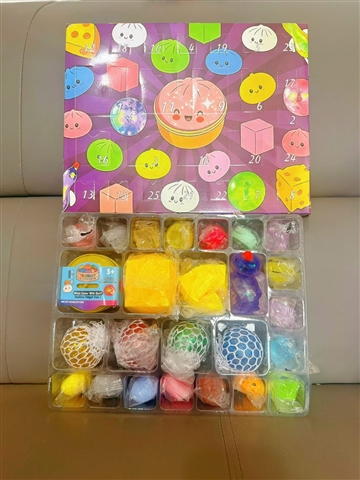
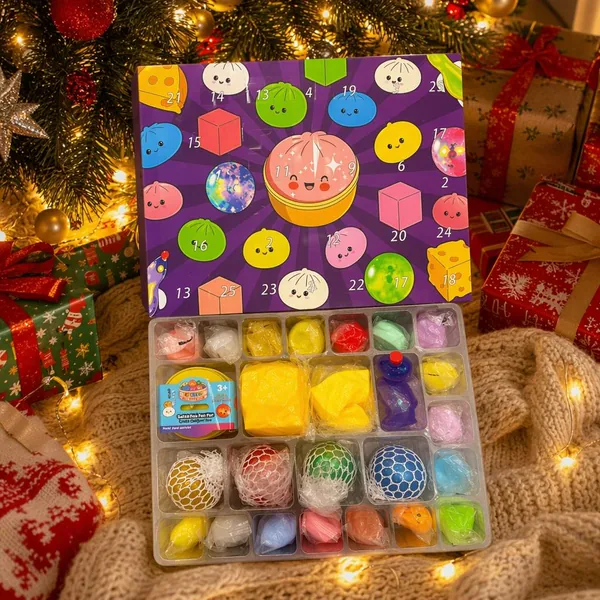
| Mystery Baozi Squishy Calendar, 24-Day Gift Format | Indicative EXW US$3.98 per calendar; minimum 5 cartons / 240 pcs; 48 pcs per carton; colour box. Selling unit is the calendar, not the individual toys inside. |
|---|---|
| Triangle Flip Finger Spinner, Display Pack | Indicative EXW US$0.41–0.42 per piece; minimum 5 cartons / 1,440 pcs; 288 pcs per carton; display box; ABS. |
| Pattern-Matching Block Game, 1,000+ Challenges | Indicative EXW US$9.30 per piece; minimum 48 pcs; 48 pcs per carton; colour box; plastic. |
| Boxing Ball Play Toy, Window Edition | Indicative EXW US$5.23–5.47 per set; minimum 5 cartons / 100 pcs; 20 pcs per carton; window box; ABS. |
| What the four lines have in common | Each states a selling unit, a carton quantity and a minimum. None of them confirms age grade, certification, stock or lead time — those remain open questions for the supplier. |
Which supplier records actually change your buying decision?
Request the records, then ask what each one lets you do. A document you cannot map to a decision is just a PDF.
A signed golden sample with colour chips attached, approved by both sides before production, is your reference for every later dispute about shade, firmness or finish Importivity. Without it, 'the production run looks different' has no baseline.
Inspection criteria written into the purchase order — defect definitions and the AQL — plus a laboratory pull from the production lot give you a defined pass/fail line before goods ship Importivity. The published guidance stops short of naming a numeric AQL or a squishy-specific defect list, so you and the supplier have to agree those in the PO. That agreement is a commercial control, not a safety certification.
Safety and quality documents should be matched to the exact item, material, function, age grade and market you are selling into Squishy Toys Wholesale. A report for a different SKU, a different material or a different age band does not transfer. Ask for the document's item reference and the market it was produced for, and check both against your order.
Why this matters on squishy-type goods specifically: EU Safety Gate notifications reported in July flagged detachable plastic eyes, feet, suction cups and beads as choking risks, and sand-filled squishies whose inner sand tested positive for asbestos Levich Toys. That is a secondary account, not a laboratory report, and it does not describe every squishy toy. It does tell you which questions to put in writing: are there small detachable parts, and is the filling specified and controlled?
Does a trading company automatically mean weaker QC?
No. Different supplier business models suit different buying needs — an illustrative 500-piece promotional order fits a trader, a first product with no engineering budget fits an ODM house, and a design you own with repeat volume fits a molder Importivity. The model tells you what to verify, not how good the output is.
A trader usually controls sourcing and consolidation, not the mould or the line. So your checks shift: who is the named production site, who signs the golden sample, who is accountable if the inspection fails, and can you get a production-lot lab pull. An ODM house owns the tooling and the design file, so your checks shift again toward tooling ownership and change control. A molder with your own design puts the burden on your drawing and your tolerances.
Judge the reply, not the label. A trader who returns carton measurements, a document list mapped to your market, and a sample path is more useful at quote stage than a factory that answers in one line.
What should you do when a supplier goes quiet or answers vaguely?
Log it as a communication data point and move on. A slow reply is not evidence of fraud, and it does not predict how the supplier will perform after payment. It does affect your planning, so record it against the same scorecard you use for everyone.
Then send one narrow follow-up rather than repeating the whole request. Ask for the two or three missing fields that block a decision — usually carton dimensions and gross weight, the mixed-carton ratio, or the document list for your destination market. A supplier who fills those gaps in one pass is telling you something useful about how they will handle a change order later.
Set a decision rule in advance so you are not negotiating with yourself. For example: any supplier with carton data, a stated selling unit and a document list goes to sampling; anyone missing two or more of those stays in the holding file. If you want to test the process on a live line item, you can request a quote and score the reply against the same worksheet.
Mixed carton squishy quote questions buyers ask next
Can I order a mixed carton below the MOQ?
Only if the supplier says so in writing. A stated minimum such as 5 cartons is an entry threshold; a mixed carton is a separate concession. Ask for the allowed SKUs, the ratio per carton and the minimum cartons per SKU, and treat anything not written down as unconfirmed.
Is the carton quantity the same as the order multiple?
No. Units per carton tells you how goods are packed. An order multiple only exists if the supplier states that orders must ship in full cartons. Without that statement, do not assume you must pay for surplus units.
What if the supplier sends a certificate for a different product?
Ask for the item reference and the market the document was produced for, then match both to your order. Documents should line up with the exact item, material, function, age grade and destination market. A report for another SKU does not cover yours.
How many suppliers should I score at once?
Enough to compare like with like. Three or four replies scored on the same fields will tell you more than ten replies judged on price alone, because price without a selling unit, carton data and document list is not comparable.
Should I ask about customization before or after the sample?
Before you commit to a sample, so the sample reflects what you intend to sell. Ask which changes are possible — colour, logo, retail packaging — and which of them alter the price, the carton or the lead time. Customization is a request until the supplier confirms it in the quote.
Do I need a lab test on every batch?
That is a commercial decision, not an automatic rule. What a report covers depends on the construction tested and the rules that apply to your market. Agree with the supplier which documents you expect per order, and keep a production-lot pull in the pre-shipment plan where the risk justifies it.
Sources
- Squishy Toys Are Flying Off Shelves in the West — So Why Are They Suddenly Being Pulled Everywhere? | Toy Manufacturing
- Toy Manufacturers in China and How to Vet One